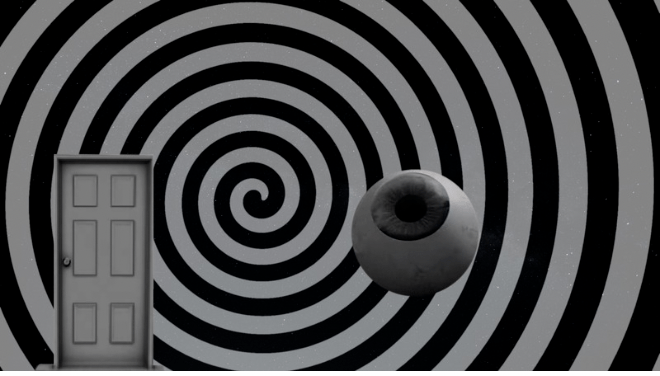
There is a fifth dimension, beyond that which is known to man. It is a dimension as vast as space and as timeless as eternity. It lies between the pit of man’s fears and the summit of his hopes. It is the middle ground between light and shadow, between despair and promise. It is an area which we call…the Twilight Zone.
You all remember The Twilight Zone, don’t you? I remember watching it on TV Land growing up, and now you can still catch the marathons on the Sci Fi channel. The opening words still cast their spell. They prepare you for something strange. Something ordinary will turn sideways. And always—always—it will end with a cruel twist.
One of the most haunting stories is “Time Enough at Last.” Henry Bemis, a timid man mocked for always reading, survives a nuclear blast. Alone in the rubble, he stumbles across the ruins of a library. And for the first time, he rejoices—time enough to read! He stacks books into piles, a lifetime of joy before him. But then comes the cruel twist. His glasses slip, fall, shatter. Nearly blind, he cannot read a word. Surrounded by everything he ever wanted, his hope lies broken at his feet.
That’s The Twilight Zone: when what you’ve longed for is finally in reach, and then it collapses into despair.
Sometimes it feels like we are living in our own twilight zone. The world trembles under nuclear threat. Wars ravage across continents. Families we thought were unshakable break apart. Bodies weaken, minds falter. We brace ourselves for the cruel twist, expecting disappointment to be the ending.
It’s a bit like when someone says “don’t worry, everything’s under control.” That’s usually when you know absolutely nothing is under control.
Or like planting a garden, spending weeks watering it faithfully, and discovering in the end that the only thing you’ve successfully grown is a bumper crop of weeds.
Or like saving up for years to take a holiday, only to realize when you finally arrive that you’ve just paid a fortune to be rained on somewhere else.
Satan whispers that this is our story—that every joy will collapse, that every hope is as fragile as Henry Bemis’ glasses. That this life is nothing more than a cruel joke, and that God himself may turn out to be the biggest twist of all.
And even the Church sometimes feeds that dread. Some corners of Christianity speak of God as though he were a harsh judge, quick to punish, eager to condemn. The picture painted is of a God standing with arms crossed, tallying sins, waiting to strike. Others promise that if you just believe hard enough, give enough, or pray in the right way, then life will go smoothly—health, wealth, prosperity. But when sickness still comes, or jobs are lost, or grief breaks through, people are left crushed, ashamed, and wondering what’s wrong with them.
That kind of preaching leaves hearts heavy with fear and souls trapped in despair. It makes God look more like a tyrant than a Father, more like an executioner than a Savior. But that is not the God who meets us in Jesus Christ. The psalmist reminds us the Lord is gracious and merciful, slow to anger and abounding in steadfast love. And St. James says it even more succinctly: mercy triumphs over judgment.
So if the end feels frightening, if Christ’s return is imagined as another cruel twist, let this be clear: the One who comes is not the destroyer, but the lover of souls. The King who is slow to anger, abounding in mercy, and determined to save. A strange King, whose power is mercy, whose scepter is compassion, whose crown is love.
The cross itself shows us the pattern. On Good Friday, Jesus is mocked as king. A robe is thrown across his shoulders. A crown of thorns is shoved onto his head. He is lifted high on a cross, enthroned in suffering. To the world it looks like another Twilight Zone ending—another dream mocked, another hope shattered.
But then comes the twist. Not the cruel twist of Henry Bemis. Not despair, but promise. The thief beside him hears it first: “Today you will be with me in paradise.”
The cross is not the collapse of hope. The cross is the coronation. This is the throne of Christ the King. A strange King indeed—honored not in triumph, but in death; robed not in silk, but in blood; reigning not from a palace, but from a place of suffering love.
And the power revealed from that throne is not fear, but love. Love that takes flesh in ordinary lives. A father who works two jobs so his children can have what they need, even though no one thanks him. A grandmother who keeps praying for her grandson, even though the world tells her he’s a lost cause. A young mother who organizes her neighbors so strangers will not go hungry. A teacher who quietly buys supplies for her students without asking for notice.
These lives don’t make headlines. The world prefers louder stories—greed, selfishness, cruelty. But here in the shadows, love keeps working. St. Matthew tells us that when we feed the hungry, clothe the naked, visit the prisoner, we serve Christ himself. In these acts of mercy, the kingdom is made visible. They are proof that fear does not win, that despair is not the final word.
This is how Christ reigns even now—not through intimidation or spectacle, but through love that casts out fear, love that multiplies in the lives of his people.
And where do we encounter this King most clearly? Not in visions of fire and rubble, but here at his table. The same body once broken on the cross is placed in your hands. The same blood once poured out for the world is poured into your cup. To the eye it looks like only bread and wine. But here is the twist: bread is made body, wine is made blood. Isolation is made communion. Alienation is made invitation.
And because we have experienced this unexpected transformation, we are sent to carry it out in our lives. We become—not symbolically, but truly—the body of Christ, his hands and his feet in the world. Loving communion with God compels us into living communion with the people made in God’s image—every person we meet.
And this kingdom is no small thing. The imagination of television gave us the image of space as vast, time as endless, infinity as unsettling. St. Paul takes that vastness and names it rightly: it is Christ’s domain. Infinity is his realm. The cross is his throne.
The one enthroned in suffering is the same one through whom the galaxies were made. His reign stretches from gnats to nebulae, from galaxies wheeling in silence to farmyards buzzing with life. From crowded classrooms to weary courtrooms, from buzzing metropoles to isolated cabins. From skeptical doubters to ardent evangelists. From the burdens you carry in your heart to the sweep of history itself.
Nothing is outside his reach. Nothing is beyond his reign. What the world frames as fear—space, time, eternity—St. Paul proclaims as Christ’s kingdom. The cosmic Christ reigns over all, and because he reigns over all, he reigns also over you, over the smallest, most ordinary details of your daily life. His rule stretches from galaxies swirling overhead to cupboards in your kitchen. And it’s odd, really—human beings spend fortunes trying to reach the stars, but most of us still can’t reach the top shelf without a stepladder. Christ rules both the stars and the shelves. Nothing is too great for him, and nothing is too small. A strange King whose hand spans the heavens yet still reaches down to steady us when we stumble.
So let me be clear. We might think we are living in a twilight zone of despair, waiting for the glasses to break. But in truth we are in the twilight zone of hope—the Christian twilight zone.
Yes, the shadows lengthen. Yes, the world trembles. But the sun is setting on sin, death, and hell. And a new dawn is rising—the dawn of Christ the King. Satan wants us to fear it. But the Church does not cower. We stand and we cry: Come, Lord Jesus!
Because when this twilight ends, when the new day breaks, we will stand in the full light of Christ the King. And he will give his victory over sin, death, and hell to all who long for it, to all who believe it, to all who wait in hope.
Henry Bemis’ story ended with broken glasses and despair. Our story ends with broken chains, risen life, and open paradise.
The psalmist reminds us: God is our refuge and strength, a very present help in trouble.
The Twilight Zone leaves its characters hopeless in the rubble. Christ the King meets us in the rubble and rewrites the ending. The surprise twist is not despair. The surprise twist is love, life, and victory. And we, who live in his light, proclaim the mystery of a strange King—one who reigns from a cross, rules through mercy, and is glorified not by conquest, but by love.
 The Rev'd Daniel W. Spigelmyer, Jr.