Grace and peace to you and mercy from God our Father and our Lord Jesus Christ. Amen.
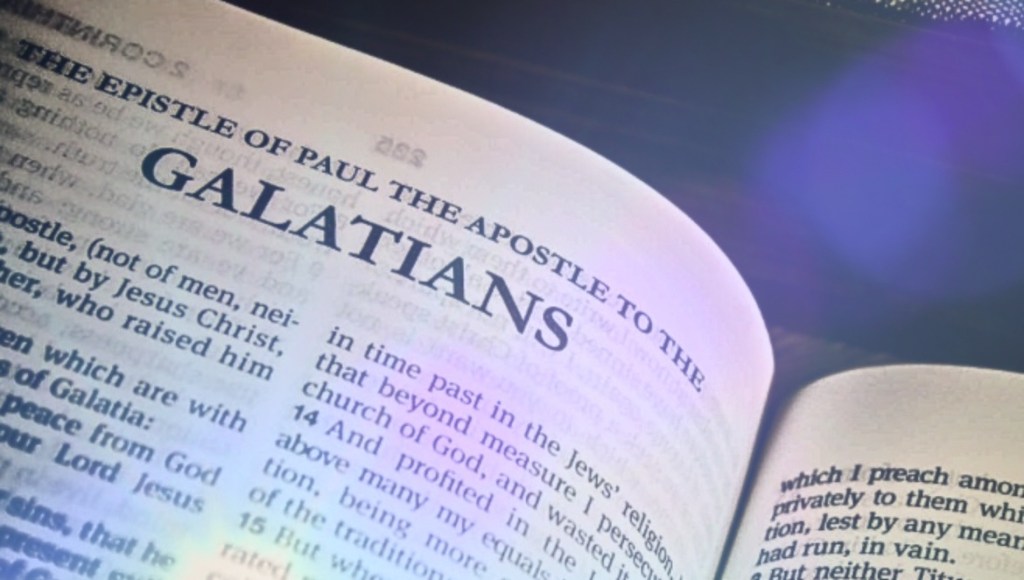
Today we’re going to do a dissection. Not of a frog, thankfully for some of you, but of a passage of Paul’s letter to the Galatians. We’re going to go verse by verse, peeling back the layers to see what was really going on then—and what’s really going on now. Paul was addressing a first-century crisis, but the words still pulse with urgency today. And if we let them, they’ll cut through more than ancient disputes—they’ll carve right into our modern assumptions, especially the ones we hold most tightly.
But first, a bit of background.
Galatians is one of Paul’s most passionate and pointed letters. He’s writing to a group of young churches in the region of Galatia—what we’d call central Turkey today. Interestingly, and this is a fun aside, anthropologists now believe the people who lived in Galatia were actually Celts—the same tribal roots as those from Ireland, Scotland, and Wales. So when Paul writes to the Galatians, he’s not just writing to Greeks or Romans, but to a people shaped by warrior culture, tribal loyalty, and deep spiritual intuition. They knew what it meant to hold fast to tradition—and they also knew what it meant to be swept up by foreign powers.
The early church was wrestling with what it meant to belong. Did you have to become Jewish first to follow Jesus? Did you have to obey the law of Moses? Circumcision, food rules, holidays? Or was Christ enough? That’s the question Paul is answering.
But he’s not writing in a vacuum. He’s writing under the shadow of the Roman empire—a world fractured by economic disparity, political corruption, religious pluralism, cultural suspicion, and violent control. Citizens were divided, confused, and anxious. Some were nostalgic for how things used to be. Others wanted to burn the system down and start fresh. Mistrust ran high. Cynicism even higher. And for those just trying to live day to day, it was easy to feel powerless, voiceless, or forgotten.
Against that backdrop—of fear, tribalism, and empire—Paul writes this letter. And it’s not tame. He’s not trying to play nice. He even says as much in the opening lines—“If were still trying to please people,” he says, “I would not be proclaiming the gospel.” It isn’t that he doesn’t care if he ruffles feathers. He knows he will. But what is at stake is bigger and more important than that. He’s trying to announce something bold: that in Jesus Christ, a whole new reality has arrived. A new kind of belonging. A new kind of identity. A freedom the empire can’t offer and religion can’t secure.
And now, with that in mind, we turn to the text.
Buckle up.
“Now before faith came, we were imprisoned and guarded under the law…”
Paul is talking about the Mosaic Law—Torah. It wasn’t bad, but it functioned like a holding cell. God’s people were kept under tight restriction, fenced in by commandments until the fullness of time. Think of it like being grounded for your own safety.
Many Christians today still prefer the spiritual equivalent of being grounded. They cling to rules, rigid moral codes, and religious and national histories shaded sepia with a memory of something that never actually really was, believing these will keep them faithful or safe or provide mooring amid the turbulent, crashing waves of day-to-day life. This shows up in a desire to return to how things “used to be”—when life was simpler, roles were clearer, and people were expected to keep in line. But the gospel doesn’t imprison—it liberates. Christ didn’t die to preserve the past. He died to set captives free.
“Therefore the law was our disciplinarian until Christ came…”
The word “disciplinarian” here is the same one we get the English pedagogue, but it doesn’t mean teacher. It more like a governess, in the sense of Maria from the Sound of Music—a guardian, someone strict and controlling, but temporary. A minder, not a parent.
Some still treat religion like a strict guardian. Do this. Don’t do that. Keep your head down. Show up on time. Dress properly. Believe quietly. That’s not faith. That’s performance. On the other hand, others have grown so suspicious of structure that they can’t recognize discipline as a gift. They equate any boundary with oppression. But Paul isn’t talking about either extreme. He’s talking about growth. The gospel doesn’t baby us, and it doesn’t dismiss us. It raises us.
“But now that faith has come, we are no longer subject to a disciplinarian.”
The age of supervision is over. The promise has come. Christ is the new center.
But some still live as though someone’s watching over their shoulder—ready to catch them messing up, ready to scold. When people long for the “good old days,” they’re often longing for control—times when social order seemed firmer, the rules seemed easy to understand, and expectations seemed to rarely change. But faith, relationship with God, doesn’t call us back. Relationship with God calls us forward. Faith isn’t about being watched. Relationship with God is about trusting to walk in love, to trust God to walk with us in love. Maturity isn’t nostalgia. It’s freedom lived with responsibility.
“For in Christ Jesus you are all children of God through faith.”
This is radical. In a world that valued lineage, status, and tribal belonging, Paul says the only identity that counts is being God’s child.
And yet, many still stake their worth on what they’ve built—families, reputations, service records, resumes—or on what they’ve rejected—institutions, authority, tradition, addiction. But Paul says none of that makes you a child of God. Only relationship with him does. That’s the scandal and the beauty of grace: it comes apart from what we do or prove or preserve. In Christ, you’re a child of God—not an achiever, not a rebel, not a relic—just a beloved child.
“As many of you as were baptized into Christ have clothed yourselves with Christ.”
Baptism was like changing your whole wardrobe. Off with the old life, on with the new. You didn’t just get wet—you got transformed.
The same is true now. And yet, so many are still dressing themselves in politics, in class markers, in past glories, in ideological uniforms as somehow some sort of marker of what constitutes a true Christian. People take pride in the college they attended, the medals they earned, the job they worked, the town they stayed loyal to—or in the way of life or way of thinking they’ve left behind, the freedom they’ve claimed, the beliefs they’ve reshaped. But Paul says you’ve put on Christ. That’s your outfit now. If people don’t see him when they look at you—something’s off. And what does it look like to be Christ? St. Matthew tells us—feeding the hungry, providing drink to the thirsty, providing for the homeless, clothing the naked, caring for the sick and visiting the imprisoned. In short, welcoming, caring for, loving the ones who can’t do it for themselves, who popular wisdom, who our own understanding tells us might not deserve it or who even deserve to be left to themselves. Imagine if God had left you out to fend for yourself when the gnashing jaws of sin’s wolves encircled you…So if God stepped in for you in Christ, who are you who bear Christ’s name, who claim the name Christ-ian, who are you to withhold mercy, grace, love?
“There is no longer Jew or Greek, there is no longer slave or free, there is no longer male and female…”
This isn’t erasure—it’s union. These categories still exist, but they no longer divide.
We’re still deeply invested in division. We divide by race, income, region, education, politics. We act like some people deserve a louder voice than others. We still believe, deep down, that certain people are more trustworthy, more respectable, more patriotic, more Christian, more normal. But Paul demolishes those walls—Christ demolishes those walls. He leaves no room for supremacy—racial, cultural, national, or religious. In Christ, we are not sorted by worth. The immigrant mother and the war veteran, the business owner and the welfare recipient, the retired teacher and the recovering addict—there’s no hierarchy here. Just a table wide enough for all.
“And if you belong to Christ, then you are Abraham’s offspring, heirs according to the promise.”
This is inheritance language. Paul is saying: you don’t just belong. You receive. You inherit the promise—not because of your pedigree, but because of Jesus.
Some cling hard to heritage—family names, national identity, the story of where they came from and what they sacrificed. Others take pride in walking away from all that, claiming their own narrative, choosing their own truth. But neither roots nor reinvention earn you a place in God’s family. Christ does. He binds you to a story that began before you and will outlast you. You are heirs, not owners. Receivers, not achievers.
You are clothed in Christ. Not draped in nostalgia. Not wrapped in self-made identity. Not cloaked in pride. You wear the fabric of grace. So wear it well. Wear it boldly. Let it change how you live.
And most of all—take heart. You are already cloaked in a love far greater than your fears, far sturdier than the walls we build between us. That same mighty love moves within you—and within the person sitting beside you—summoning, restoring, forging something altogether new. And this, this is the high road we are called to walk—side by side, never alone, loving and welcoming each other as Christ first loved and welcomed us.
In the name of the Father and of the Son and of the Holy Spirit. Amen.
 The Rev'd Daniel W. Spigelmyer, Jr.