Grace and peace to you and mercy from God our Father and our Lord and Savior Jesus Christ. Amen.
You can tell a lot about someone by their hands. Some of us remember our mother’s hands in great detail—the way they moved through flour, or brushed hair back from a forehead, or reached out when we needed comfort. Some of us don’t have that kind of memory, and that’s okay. Not everyone had a mother who showed up the way we needed.
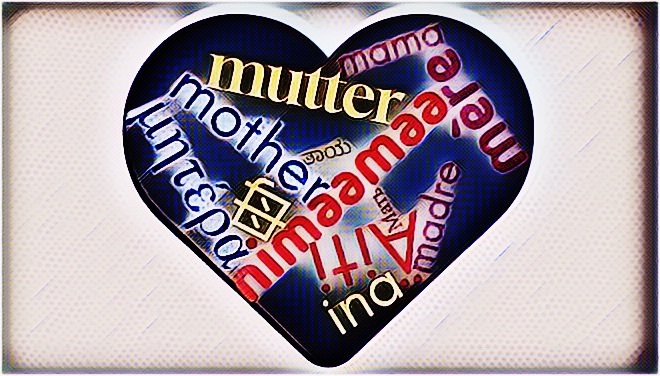
For some, the word “mother” stings more than it soothes. If that’s you, you are not alone. This day may ask a lot from you. But the ideal of motherhood—the deep love, the steady care, the fierce protection, the gentle tending—that ideal is worth lifting up. Even if no one lived up to it fully. Even if we’ve fallen short ourselves. Because at its best, “mother” isn’t just biology. It’s a calling. And it’s a glimpse—just a glimpse—of the kind of love God has for us.
And today’s Gospel gives us a picture of that kind of love, right there on the beach. They had gone back to what they knew—fishing. It made sense. The cross had left them shaken. The resurrection had left them confused. So they got in the boat. That’s what we do too, when life feels too big. We go back to what feels known, even if it’s empty. They fished all night. Nothing. Then they heard a voice from the shore. “Children, you have no fish, do you?” Not a scolding voice. Not smug. Just true.
And then—“Cast the net to the right side of the boat.” They did. And suddenly, the net strained with fish. That’s when John said it out loud: “It is the Lord!” And Peter jumped in, heart first. When they reached the shore, they saw a fire burning. Bread. Fish laid out. Jesus, waiting with breakfast. He didn’t wait for them to come to him with answers. He didn’t demand apologies. He didn’t say, “Now do you get it?” He just fed them.
That’s mothering. That’s the kind of love that sees you in your need, shows up with a meal, and calls you by your name. That’s the kind of care that restores first and speaks later. That’s the kind of grace that doesn’t give up, even when we run or fall or fail. Jesus fed them.
Then he turned to Peter. You know Peter. Impulsive. Bold. And the one who said three times, “I don’t know the man.” Now Jesus asks him three times: “Do you love me?” Not to shame him. Not to press a bruise. But to rebuild what had been broken. To give him a new way forward. And each time Peter says yes, Jesus gives him a job. “Feed my lambs. Tend my sheep. Feed my sheep.”
Do you hear it? The job isn’t power. It’s not payback. It’s care. Jesus doesn’t say, “If you love me, go build a church.” Or, “Go preach the best sermon.” He says, “If you love me, care for the ones I love. Feed them. Watch over them. Make sure they’re okay.” That’s the call he gave to Peter. That’s the call he gives to us.
To love means to tend. To feed. To show up. That’s what mothers do, at their best. That’s what we’re all called to do. It’s not soft. It’s not small. It’s world-changing. Because when someone tends to you—really tends to you, listens to you, feeds you, shelters you—you learn what love looks like in flesh and blood. And when you do that for someone else, you become a mirror of God’s own love.
That’s the kind of church we want to be, isn’t it? We talk about “Mother Church,” and not just as a quaint old phrase. There’s wisdom in it. Because when the church is doing what it’s meant to do, it mothers us. She gathers us. She feeds us. She teaches us how to walk by faith. She steadies us when we fall. She reminds us who we are when we forget. She gives us the Word. She gives us Jesus. We are not mothered only by individuals—we are mothered by the church herself. In her preaching, her teaching, her witness. In bread and wine, in washing and welcome. In the body and blood of Jesus shared with us. In the Spirit whispering through the gathered voices of the faithful. In the stubborn, saving love that refuses to let us go.
Some of us didn’t have mothers who could do those things. Some of us can’t quite remember the shape of that kind of love at home. But here—in this place—we still receive it. Not always perfectly. But faithfully. Again and again. And here’s the wild part: we are the church. So we are called to mother, too. We’re called to nourish each other. To sustain each other. To offer the same welcome, the same grace, the same real food that has kept us going. Not in some abstract way, but right here. In the casseroles dropped off when grief hits. In the prayers whispered when strength fades. In the shared wisdom of the older ones and the stubborn hope of the young. In the body of Christ, broken and shared.
That’s our call. To tend. To feed. To mother—not just because it’s Mother’s Day, but because Jesus tells us how to love him: Feed my lambs. Tend my sheep. Feed my sheep. So today, let’s thank God for mothers—and for everyone who mothers us along the way. Let’s thank God for the ones who feed us in body and soul. Who tend to us when we’re broken. Who call us back when we stray.
And let’s hear again that same call: “Do you love me?” Then feed. Tend. Love. Not in theory. Not in name only. But in the stuff of life—in meals shared, in tears wiped, in hands held, in second chances given. Jesus cooks breakfast. Then he sends us out with a mothering call—mother as you have been mothered.
In the name of the Father and of the Son and of the Holy Spirit. Amen.
 The Rev'd Daniel W. Spigelmyer, Jr.