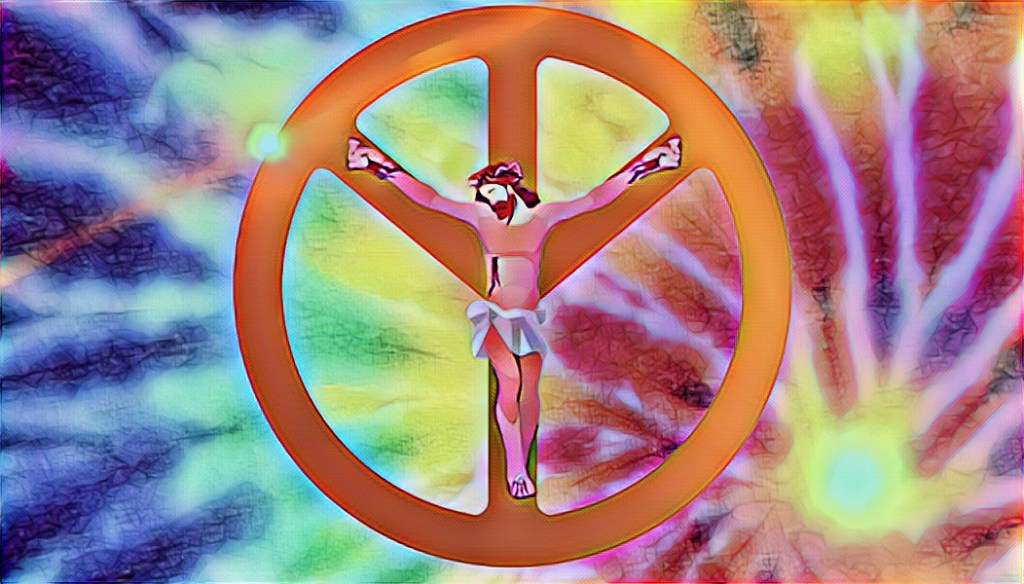
In the beginning, God wove the world together in perfect harmony, every thread aligned to his good design. This was peace—not mere quiet, but shalom: a wholeness where creation flourished, relationships thrived, and God’s presence was near. It’s the peace etched deep into our hearts, the longing we carry for what was lost when brokenness—the imperfection that arises when peace is corrupted—came into the world. Yet it’s this peace Christ restores—a peace that mends the broken, heals the fractured, and reconciles all things to God. It’s the peace of the Lord, not just a promise for tomorrow, but a reality breaking in today. And so today, as we take a moment to step back and consider peace, and our longing for it, it does us well to revisit just what it is that we want. We want things to be as God wants them. Sometimes that might unsettle us.
Let us pray. May the words of my mouth and the meditations of our hearts be acceptable in your sight, O Lord, our Rock and our Redeemer. Amen.
Peace—the great desideratum of the ages. We long for it, dream of it, and chase after it. It’s what we yearn for when life’s noise grows too loud, when the world spins out of control, when our hearts ache for more. We want peace in our homes, minds, relationships, and world. We feel its absence like a void nothing fills. Why? Because we were made for peace. Deep down, we know we were meant to live in harmony—with God, one another, and the world. It’s what our hearts crave most and yet seems the hardest to grasp. Peace—the great desideratum of the ages.
The peace we long for is a promise, not something the world hands us, no matter how much it claims otherwise. At every turn, the world bombards us with promises: “Avoid conflict, and you’ll find peace,” or, “Accept everything and everyone, and you’ll have peace.” Yet, we still ache for peace, struggling to find it. Why? The peace the world offers is no peace at all but a figment—a lie keeping us striving, longing, searching, hungering. If we stop searching in those places, how would the world keep going? The peace we so long for isn’t obtained through worldly wisdom but through God’s promise in Jesus, repentance, and restored relationship with him.
We’ve settled for peace that’s merely the absence of trouble, turning it into a cheap imitation—tolerance without truth, escapism without healing. We see signs everywhere implying peace is about making everyone happy, letting them go their way unchallenged. This is the peace of compromise, never rocking the boat, sweeping things under the rug. It may last a day or two but never endures. Ignoring truth creates a false peace, a paper-thin peace, easily shattered by real life. God’s peace isn’t about looking the other way but confronting brokenness and offering it up to him.
Then there’s the peace we try to find by running away. We distract ourselves, escaping into things that take our minds off pain or reality—turning on the TV, scrolling our feeds, taking a drink, binging a show, shopping, or avoiding hard conversations. These escapes may work temporarily, but the pain lingers, returning stronger. Escaping conflict never solves it, nor does running from truth heal it. It’s like bandaging a wound without treating the infection—it covers for a while, but the rot deepens. True peace meets the mess squarely, sits with the pain for a time, and moves on to God’s healing. Healing often takes hard work, just like recovering from surgery. In the same way, peace—that great desideratum of the ages—requires effort to recognize, grasp, and live out. Peace doesn’t magically make every day trouble-free.
That’s what John the Baptist preaches in the wilderness. St. Luke sets the stage, grounding his account in history with names and places—Tiberius, Pilate, Herod, the high priests Annas and Caiaphas—before shifting to the wilderness. There, the word of God comes not to kings or priests but to John, son of Zechariah. John is the forerunner, the voice crying in the wilderness, fulfilling Isaiah’s prophecy to prepare the way of the Lord. His ministry begins the story of Jesus, the Messiah who brings God’s salvation and restores peace. Luke shows that the peace we long for starts with a call to repentance, preparing our hearts to meet Jesus. This peace isn’t quiet or comfortable but disruptive and challenging.
John’s words summon us, but they also carry a promise. “Repent!” he cries. “Prepare the way of the Lord!” Repentance isn’t about guilt or shame but about returning to God, facing the truth of who we are, and joining him in the hard work of healing. It’s the fire of the refiner’s furnace, the soap that cleans the filth. Peace is the Holy Spirit’s work. She holds us to the fire of truth, burning away the dross of self-delusion, scrubbing us with disquietude to rouse us from complacency. This refining process can be painful but is essential for lasting peace. Peace—the great desideratum of the ages—is work.
This peace isn’t distant or vague. It’s not only a future hope but a present reality for those baptized into Christ Jesus through the Holy Spirit. It’s the restoration of how God designed things to be before sin broke the world. True peace is living in harmony with God, ourselves, and each other. It’s the peace of Eden before the fall, when the world was good and whole. It’s the kingdom of heaven breaking into our world now, calling us to live as its citizens, as though all were already made right. This is the peace Jesus offers us even now through repentance. But repentance isn’t an empty “sorry.” It’s faith in action, responding to the Holy Spirit’s prompting to align with God’s will, demonstrated fully in Jesus. Want peace in your life? Ask, “What would Jesus do?” Then listen for the Spirit’s answer, even if it challenges you. That’s often the nature of God’s peace.
This peace isn’t private. The peace Jesus brings is not just between you and God. It is the peace of communion, the peace of the body and blood. At the table, we come together as a community to partake in the body of Christ, broken for us, and the blood, poured out for us. In this sacrament, we remember the peace Jesus gives—peace that reconciles us to God and to one another. Taking the bread and wine calls us to a peace beyond ourselves, healing fractures in relationships and drawing us into deeper communion. This is the peace the Holy Spirit offers, inviting us to live it now, even before Jesus’ return.
The false promises of peace the world offers—tolerance without truth, escapism, or reliance on politics, economics, or self-help—may bring temporary relief but never God’s peace. The peace we long for comes from repentance, the hard work of facing truth and turning back to God. It comes from God’s promise in Jesus, who will return to make all things right. Until then, we live in the tension between the already and the not yet. This peace is ours now in Jesus and will be fully realized when he comes again.
So we turn to Jesus now, living in the peace of repentance, refined by the Holy Spirit, reconciled to God and one another. The peace we long for is here in Jesus’ body and blood, at the altar and in one another. It’s here in the Spirit calling us to live it out—in the world and the church, this motley group of friends striving to be God’s hands in a world that desperately longs for peace, long for Christ Jesus—the great desideratum of the ages.
 The Rev'd Daniel W. Spigelmyer, Jr.