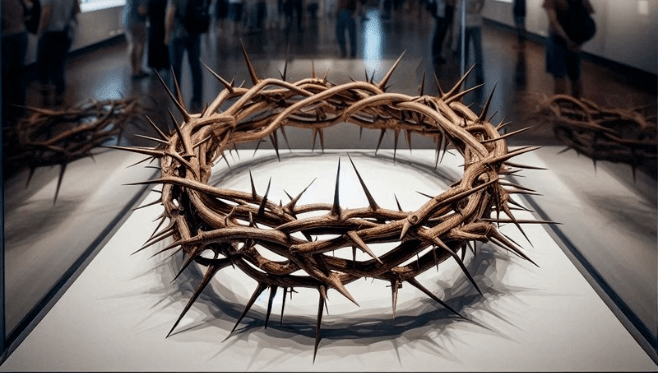
The Hebrew word kavod, often translated as “glory,” means more than just brilliance or splendor—we might think of it as a single idea in two words, “divine glory.” It conveys weight, significance, and the palpable presence of God’s majesty It’s the kind of presence that filled the temple, too overwhelming for the human mind to fully grasp. This divine glory carries divine authority and holiness, a presence with depth and power. When Jesus came to us, he revealed this divine glory in a surprising way—not through royal display, but through humble acts of love, healing, and sacrifice. He didn’t just show us glory; he took on everything that is ours that’s the opposite of divine glory. He exchanged our shame, our brokenness, our failure, and our sin for his honor, his wholeness, his strength, and his righteousness. His ministry was for our benefit—his healings restored our health, his teachings gave us truth, his death bore our burdens, and his resurrection opened the way to eternal life. So, think about it: the compassion, justice, and love of God—once distant—are now alive in us through Jesus’ sacrifice and the work of the Holy Spirit. How might we reflect his divine glory in our own lives?
Let us pray. May the words of my mouth and the meditations of our hearts be acceptable in your sight, O Lord, our rock and our redeemer. Amen.
In December 2009, on my first trip to Great Britain, I got to see the British Crown Jewels. It was a crisp winter day, perfect for wandering through the Tower of London. I made my way into the Jewel House, where the Crown Jewels are displayed. The room itself felt like a vault—thick stone walls, dim lighting to set the mood, and these incredible glass cases filled with centuries of royal history.
As you move through, they’ve got you on this conveyor belt to keep the crowd moving, and let me tell you, those jewels—wow. The crowns, scepters, and orbs, all studded with enormous diamonds and rich, deep-colored gems, were absolutely dazzling. The grandeur and history behind each piece really hit you. You can’t help thinking how befitting of royalty…
And of course, there were the yeomen, also called Beefeaters, standing guard, protecting those royal jewels. Now, I do enjoy myself a good drink, so I couldn’t help but think, “Wouldn’t it be something to have a Beefeater G&T right now?” But back to the jewels—they were just breathtaking. Seeing them in person, I could almost feel the weight of the monarchy’s long history, all condensed into those glittering treasures. It was one of those moments that stays with you—seeing such beauty and such tradition up close, such majesty, such glory right there on display in front of you.
When I think about the Crown Jewels in the Tower of London, it’s easy to see how they impress with their beauty and weight. They shine brightly in the light, sitting behind glass, protected by guards. The world looks at them and sees wealth, power, and authority. But when we think about the crown of Jesus, it’s different.
The crown that Jesus wore wasn’t made of gold and gems. It was made of thorns. And that crown didn’t sparkle. It hurt. That crown wasn’t a symbol of power like the jewels in the Tower of London—it was a symbol of love. Jesus wore that crown because he loved us so much that he was willing to suffer for us.
And so today, in the second lesson from Hebrews, we’re told something important. It says, “We see Jesus, who for a little while was made lower than the angels, now crowned with glory and honor because of the suffering of death.” What’s amazing about this verse is how it ties together two things that we don’t usually think belong together: glory and suffering. In the world, we often think glory comes from winning, from being the best, from standing on top of the mountain. But the glory of Jesus came because he suffered. His path to the crown wasn’t through conquering with might, but through giving himself up for the sake of others.
That’s something we don’t see in the Tower of London. Those crowns and scepters might be covered in diamonds and pearls, but they were worn by people who ruled with power and strength. Jesus’ crown, though, was worn out of love. He became lower than the angels, and he suffered for us, so that by the grace of God, he might taste death for everyone. He didn’t have to do it. He wasn’t forced into it. He chose to suffer and die because that’s how much he cares about us. And because of that, God crowned him with glory and honor.
What does that mean for us? Well, it means that when we suffer, Jesus knows what that feels like. When we’re hurting, Jesus is with us. He doesn’t just stand apart, distant and untouched by the pain we go through. He’s been there. He’s felt it. And because he’s felt it, he understands.
It also means that suffering isn’t the end of the story. Just like Jesus was crowned after his suffering, we can trust that God is at work in our struggles too. That doesn’t mean it’s easy. Suffering is hard. It hurts. But when we trust in Jesus, we can hold on to the hope that God will bring something good from it, just like he brought glory from Jesus’ suffering.
Maybe you’re going through something difficult right now. Maybe you’re feeling tired or overwhelmed. Maybe you’ve lost someone, or you’re facing a challenge that feels too big. When we’re in those places, it’s easy to feel alone. But we’re not. Jesus is with us. He’s been through it. And because of that, he’s not just watching us from a distance. He’s walking with us through the hard times, right beside us—right beside you. He knows what it feels like to hurt. He knows what it feels like to be tired. He knows what it feels like to carry something heavy. And because of that, he’s there to help us carry it too.
But there’s more. Jesus’ crown shows us something about how we’re called to live. Just as his suffering led to his glory, our struggles can lead to something good too. When we love others, even when it’s hard, even when it costs us something, we’re following in Jesus’ footsteps. And in doing that, we’re showing the world a different kind of glory. Not the kind that comes from power and wealth, like the jewels in the Tower of London, but the kind that comes from love and sacrifice.
Think about a time when you’ve had to put someone else first. Maybe you’ve taken care of a sick family member. Maybe you’ve spent time helping a friend who’s going through something tough. Maybe you’ve worked long hours to provide for your family. Those moments aren’t easy, and sometimes they can feel like we’re wearing our own crown of thorns. But in those moments, we’re showing the love of Jesus. We’re following his example, and in doing so, we’re sharing in his glory.
Jesus didn’t shy away from suffering because he knew it was the way to bring about something greater. We don’t need to shy away from it either. When we face hard times with faith, trusting that Jesus is with us and that God is at work, we’re participating in that same story of love and redemption.
So when you think about crowns, like the ones in the Tower of London, remember that there’s another kind of crown than the ones we most often first think of—the crown of Jesus, the one who wore thorns and now wears glory. His crown is different because it reminds us of his love, his suffering, and his victory. And because of that, we know that no matter what we’re going through, we’re never alone. Jesus is with us. He’s walked the path before us, and he’ll see us through it to the end. And in that, we find our hope, we behold true glory right there on display in front of us.
In the name of the Father and of the Son and of the Holy Spirit. Amen.
 The Rev'd Daniel W. Spigelmyer, Jr.