Obligation is more than just a duty; it’s a binding force, a tether that connects us to others. The word itself has deep roots, tracing back to the Latin obligatio, meaning “to bind” or “to tie.” It’s made up of two parts: ob, meaning “toward,” and ligare, meaning “to bind.” Together, they form the idea of being bound toward something or someone, of having a responsibility that pulls at us. In Christianity, obligation takes on great meaning. Some bristle at the notion, but it’s inseparable from our life as a disciple of Jesus. It’s not just about doing what’s expected, but about living in a way that honors the freedom we’ve been given by God because of Jesus. True freedom isn’t about escaping responsibility; it’s about embracing it. It’s the freedom to do whatever it takes to create and maintain good relationship with God and with others—without fear. Fear of the penalty of sin, fear of the consequences of death—they no longer have any hold on us. There’s a simple, undeniable truth: no one is truly free until everyone is. Obligation, then, isn’t a burden. It’s a privilege. It’s the call to love, to act, to serve—because we no longer need to fear anything that stands in our way. We’ve already been set free.
Let us pray. May only God’s Word be spoken and may only God’s Word be heard; in the name of Jesus. Amen.
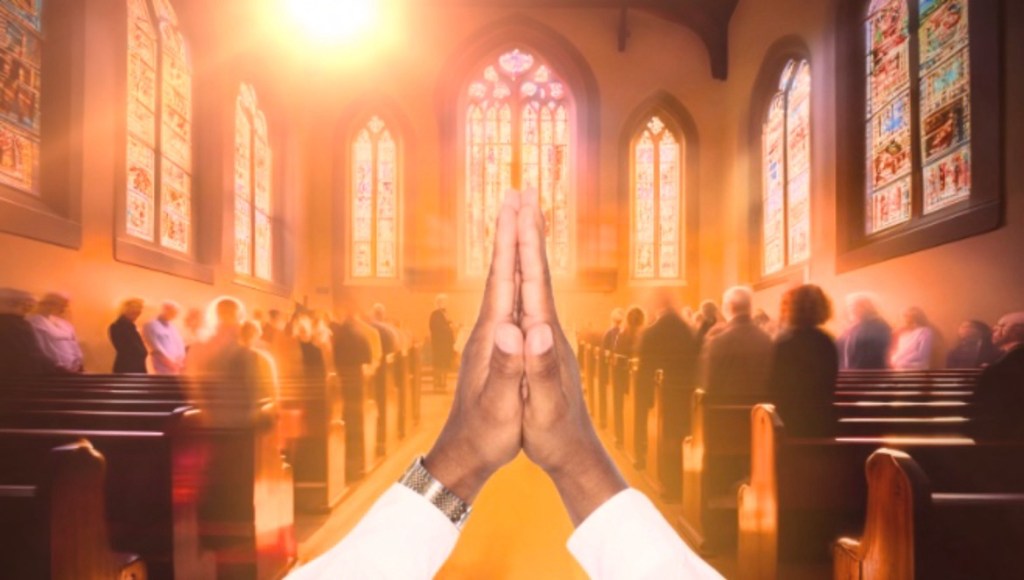
Prayer is often seen as a deeply private affair, and in many ways, it is. Our quiet moments with God are sacred, personal, and deeply intimate. But prayer is also something we do together. In fact, when we gather in worship, every word we speak or sing is a communal prayer. Whether it’s the prayers of confession, the hymns of praise, or the petitions lifted up for the world, each part of the liturgy is a collective act of faith. We’re not praying in isolation, but as one body, lifting our voices together before God. One of the hallmarks of Christian life is coming together to pray. In fact, it’s hard to say someone is truly living the Christian life outside the circle of communal prayer. Unless circumstances are beyond your control, coming together to pray with the community of believers is fundamental to faithful discipleship.
The New Testament even calls this out in perhaps one of the first truly “churchwide letters” intended to lay out some fundamentals theologically and practically for what Christians believe and therefore do. That “churchwide letter” is the book of Hebrews. Think of it as one of the first formal formulations of doctrine. Hebrews tells us not to neglect meeting together, as some were in the habit of doing already in the early church. It’s a reminder that even then, people were falling away from the community of prayer. Some things never change. But this call to gather together isn’t just a rule to follow. It’s a gift. In the gathering, in the shared prayers and shared faith, we find strength. We are reminded that we don’t walk this journey alone. When we pray together, we’re stepping into the very heart of what it means to be Christian: a life of relationship with God and with one another, grounded in faith and lifted up in prayer.
But let’s be honest, prayer isn’t always easy. It’s not just about sending up our requests or hoping for answers. It’s about stepping into something bigger than ourselves. When we pray together, we’re participating in God’s work of healing and restoration. It’s not passive. It’s active. And it’s powerful.
St. James, in his letter, lays it out clearly for us today: “The prayer of a righteous person is powerful and effective.” That’s not just a nice phrase to hang on a wall. It’s a reminder that our prayers have weight. When we pray, we join God in the work of healing—healing bodies, healing hearts, and healing relationships. We’re not bystanders in this. We’re participants. And every time we lift up our voices together, we’re stepping into that sacred work of restoration.
But James doesn’t stop there. He tells us that prayer isn’t just about personal belief or quiet conversations with God. No—it’s about communal action. It’s about praying for one another, carrying each other’s burdens, and trusting that God will act. It’s not enough to just say we believe in prayer. We’ve got to live it. When one of us is hurting, we all hurt. And when we pray for each other, we’re showing what faith looks like—together.
Now, here’s where it gets tricky. Prayer and care go hand in hand. And sometimes, care means extending grace when we’d rather hold onto our grudges. It’s easy to pray for people we love. It’s a lot harder to pray for people who’ve hurt us, let us down, or wronged us. But that’s exactly what we’re called to do. We’re called to show the same grace and mercy that God has shown us. “Love your enemies; bless those who curse you,” Jesus says in St. Matthew’s gospel, and he goes on to further up the ante, “Do good to those who hate you, and pray for those who spitefully use you and persecute you.”
Think about this: refusing to forgive is like locking yourself in a prison cell with the key right beside you, but expecting the other person to feel trapped. We hold onto our anger, our bitterness, and we think peace to come to us, or the wound will heal over, or maybe even that we’re hurting those who’ve wrong us. But all we’re really doing is trapping ourselves. And that’s not what God wants for us. God’s grace is bigger than that. His forgiveness is deeper than that. And if we’re going to participate in God’s work of healing, we’ve got to open that door, pick up the key, and let go.
Forgiveness isn’t a suggestion from Jesus; it’s a command. He didn’t say, “Forgive if it feels right,” or “Forgive when it’s easy.” He said, “If you do not forgive others their sins, your Father will not forgive your sins,” again from Matthew’s gospel. That’s not open to interpretation. It’s a clear directive.
Forgiveness isn’t an option—it’s a nonnegotiable part of following Christ. When his disciples asked him to teach them to pray, he taught them, “Forgive us our sins as we forgive those who sin against.” That is to say, forgiveness is something we receive—and it’s something we give!
Jesus showed us just how far this radical command goes, to what extent—on the cross. There, where he was being murdered, he cried out, on behalf of the very people who were murdering him, “Father, forgive them, for they know not what they do.” In the face of brutal violence and hatred, as nails were driven into his hands, he didn’t hold onto bitterness or pain. He forgave. And if our Lord, in his agony, could forgive those who were literally killing him, we have no excuse for withholding forgiveness from anyone in our lives. We who are disciples of Jesus, who call him our model of the godly life, if we would be holy as our Father in heaven is holy, if we would consider ourselves righteous, good people—we can’t anymore withhold forgiveness toward those who have wronged us than Jesus withheld it from those who wronged him. Is the servant greater than the master? Are we greater than Jesus? We forgive others because God, because Jesus first forgave us—no strings attached.
To be sure, forgiveness is hard. It’s work. It’s not passive or easy. It requires effort, patience, and humility. But this work is rooted in faith—faith that God’s grace is enough to heal what’s broken, faith that his mercy can cover all sin, and faith that in forgiving others, we’re not excusing wrongs but trusting in God’s justice and righteousness. This is a faith that works. It’s a faith that doesn’t just talk about love but shows it, even when it’s uncomfortable or painful. Forgiveness is how we live out our relationship with God. It’s not a nice ideal—it’s a holy obligation, grounded in the same grace and mercy we ourselves receive from God. If we call ourselves followers of Christ, then forgiveness must be at the center of our lives, just as it was at the center of his.
James invites us to confess our sins to one another, to pray for each other, so that healing may come. This kind of prayer isn’t just about saying the right words. It’s about being honest. It’s about being vulnerable. It’s about trusting that God’s mercy is big enough to cover all of our mess. And it’s about recognizing that healing isn’t just physical—it’s relational. When we confess, when we forgive, we restore what’s been broken between us. We let God’s grace flow through us, and that’s where real healing begins.
And here’s the thing—when we do this, we’re living out our relationship with God. Faith isn’t a private thing. It’s not about personal comfort or checking off a spiritual to-do list. It’s about being part of something bigger. It’s about being a community that prays together, cares for one another, and actively participates in God’s work in the world. It’s not our job to determine the sincerity of someone’s apology or confession. Our job is to forgive, as we’ve been commanded. God is the one who sorts out guilt—both theirs and ours. When someone comes to us in confession, with an apology, it’s not for us to measure the depth of their remorse. We’re called to loose their sins, to offer the healing forgiveness Christ himself extends to us. Refusing that forgiveness is refusing to follow our Lord’s example. If Christ, in his perfection, forgives us freely, who are we to withhold that same forgiveness from others? Recall the parable of the Unmerciful Servant…Matthew 18. Look it up for a refresher. Forgiveness is a ministry of healing, and by it, we participate in the work of God’s kingdom.
But here’s the good news: that’s the community we’re called to be. We can be and are that community—not on our own, but by the power of the Holy Spirit, who calls us together despite what makes us different and what makes us similar. The Holy Spirit brings us together and guides us in being people together, a family rooted in something far bigger than ourselves, a bunch of people who don’t just believe in prayer but live it out. Let’s pray for one another, even when it’s hard. Let’s be vulnerable before one another to one another and trust that God’s grace is enough to keep us in relationship and mend our relationships when things inevitably get messed up. And let’s extend forgiveness, even when our hearts resist, knowing that in doing so, we’re unlocking the doors to healing, both for ourselves and for others.
When we do this, when we step into this work together, we’re living out the kind of faith God calls us to—we live the kind of relationship that God wants for us. It’s a faith that heals. It’s a faith that restores. It’s a faith that brings us into deeper relationship with God and with each other. And when we live that way, our prayers—our actions—become a powerful force for good in our lives, in our church, in our community, in our country, and in the world.
In the name of the Father and of the Son and of the Holy Spirit. Amen.
 The Rev'd Daniel W. Spigelmyer, Jr.