St. Augustine of Hippo described sacraments as “a visible sign of invisible grace.” That is to say, sacraments, such as communion, use tangible elements, in this case, bread and wine, as vehicles for conveying spiritual realities that transcend physical perception. Hence, “means of grace.” In communion, bread and wine aren’t symbols, but are the real body and blood of Christ. This means that while the bread and wine are physically present, they also embody Christ’s presence and sacrifice. We who participate in communion receive these elements both bodily and spiritually, and so experience a union, a communion with God, through Jesus, in the visible signs of God’s invisible grace. That’s once again a brief reminder of what’s going on in communion, and in sacraments in general, as we go forward today and consider more deeply what it means that Jesus is the bread of life.
Let us pray. May the words of my mouth and the meditations of our hearts be acceptable in your sight, O Lord, our rock and our redeemer. Amen.
In ancient valleys and fertile plains, a small band of nomadic hunter-gatherers roams about. Wrapped in animal hides, they moved with the seasons, following the migrations of game and the ripening of wild berries. By day, they trek through dense forests and across wide, open meadows, their eyes keen for signs of food. By night, they huddle around crackling fires, sharing stories and warmth under a sky brimming with stars. Among them was a young woman, Torga, her hands deft and skillful, who would unknowingly shape the future of her people and human history itself.
One evening, as the sun dipped below the horizon, casting a golden glow over the landscape, Torga was busy grinding grasses to mix with water for gruel, the staple meal for her group when meat wasn’t available. She’d figured out the grass was easier to eat after she’d ground and mixed it into a paste. She thought the gruel was right now, so she got up to share with everyone sitting around the fire. In her haste, she accidentally spilled some of the gruel on one of the hot rocks at the fire. As the night wore on, she noticed the gruel had dried up, into a thin, crispy layer. Curious, she broke off a piece and tasted it. What a delight! What unexpected texture—and flavor! Excited, she shared her discovery with the group. They were impressed too. Torga realized that she could do this with the gruel all the time, and it would taste a lot better. Her serendipitous accident not only opened the way to another food for her group, but would also influence the trajectory of human development itself.
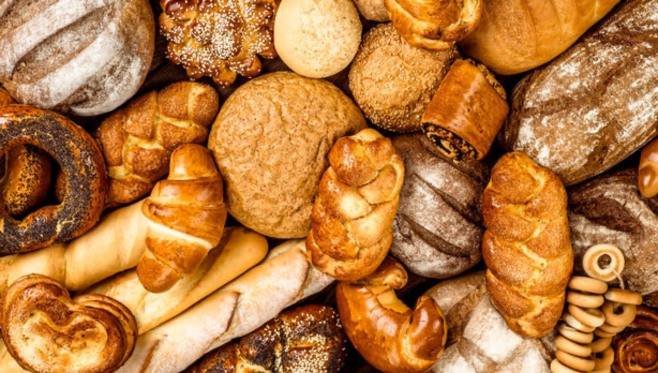
As time passed, people refined Torga’s discovery, and others like hers, and bread was born. Bread wasn’t just a new food; no, it became a cornerstone of life, nourishing bodies and providing a sense of stability, security, and reliability. With a constant food supply, communities grew and thrived. People specialized in farming, craftsmanship, and leadership. Then came systems of trade, where they even came to exchange their surplus grain and bread for other goods and services.
It’s incredible to think about how a simple accident led to such an important discovery, shaping the future of these communities and human history itself. Civilization’s roots are often traced back to the cultivation of cereal grains—wheat, rye, oats, and barley. And when we think about the early days of human history, it’s easy to see why. Having grain was really important because it helped people establish communities and build complex societies. It provided stability, security, and reliability. But if we take a closer look at the story, we find something interesting, a bit different than we might first have assumed. It wasn’t just about the grain itself, but about the wonderful gift that came from it—bread. In fact, paleontologists now think the discovery of bread probably led to the cultivation of grain, which led to civilization. That is to say, civilization didn’t produce bread; bread produced civilization. People started to grow grain not just for the sake of having grain, but because they wanted a steady, secure, reliable supply of bread. Bread became a symbol of nourishment and togetherness, and it played a big role in shaping the way early humans lived and connected with one another. It still does today. Think of that meme from Oprah—“I love bread.” Isn’t it amazing how something as simple as bread can have such a fundamental impact on human existence, stretching as far back as prehistory, providing us with stability, security, and reliability for our whole lives?
When we reflect on the idea of Jesus saying, “I am the bread of life,” it’s really something special. Just like early humans worked so hard to grow grain so they could have a steady supply of bread, Jesus offers himself as the essential nourishment for our hearts and souls. Bread, in this sense, is more than just food. It represents the very core of what keeps us spiritually healthy and alive.
St. Paul helps us understand this even more deeply. He tells us that in Jesus, “we live and move and have our being,” and that “all things in heaven and on earth were created through him and for him.” This reminds us that Jesus is not just our spiritual food but also the very foundation of everything that exists.
So, how can we live out this wonderful truth in our everyday lives? One meaningful way is through the sacrament of Communion. When we share in the bread and wine, we’re partaking in the real presence of Christ—his body and blood. This act isn’t a mere symbol. It’s a living reminder of Jesus’ promise to be with us, to nourish us, to sustain us. It’s a beautiful way to connect with his presence and remember how he fills our lives with his love and grace. But our response to Jesus being the “bread of life” extends beyond the altar. It calls us to recognize his presence in every aspect of our daily lives. Just as bread was central to the sustenance and growth of early civilizations, Jesus should be central to our spiritual and communal lives. When we eat the bread of life, when we take Jesus’ body and blood into ourselves, it becomes part of us. As he says, we abide in him and he in us. When we eat the bread of life, when we take Jesus’ body and blood into ourselves, we become part of Jesus and Jesus become part of us. We become Jesus’ body, his real presence, in the world. We become bread for the world, as he is bread for us.
Nourished by the bread of life, we disciples of Jesus are called to cultivate a daily dependence on him for spiritual sustenance, much like we depend on bread for physical nourishment. This involves regular prayer, reading Scripture, and seeking his guidance in all our decisions. By making this a habit, we acknowledge our reliance on Jesus and open ourselves to the sustaining grace of his abiding spirit, the Holy Spirit herself, in our lives.
Nourished by the bread of life, we disciples of Jesus are called to build and nurture our communities by caring for one another and sharing our resources. Look at the story today from the time of the apostles. They “were of one heart and soul,” we’re told, and shared everything in common. So we strive to foster a spirit of unity and love. Our communal life mirrors the early church and demonstrates our commitment to living out Jesus’ teachings.
Nourished by the bread of life, we disciples of Jesus are called to be agents of peace and reconciliation in our world, actively seeking to heal divisions and forgive grievances. Jesus, through his sacrifice, reconciled all things to himself, and as his followers, we’re called to work towards justice and harmony in our relationships—relationships that go beyond just who we know, but also in our community, our nation, and even around the world. Apathy isn’t godly. Striving for justice in all the world is a baptismal commitment we made before God to one another and to the whole body of Christ, and so we cannot shirk the call to be agents of God’s peace in our world.
Nourished by the bread of life, we disciples of Jesus are called to be living witnesses of his love. We’re called to show compassion, kindness, and generosity to those around us. St. John today emphasizes that our fellowship is with the Father and with his Son, Jesus. This fellowship should be evident in our actions and demonstrate to the world the transformative power of Christ’s love in our lives. How can we who have taken Christ into ourselves, allowed him to become one with us, do any other? Can Jesus withhold the love who he is? So therefore how can we who are his body, his own presence in the world, harbor contempt, grievances, grudges, and malcontent against our fellow brothers and sisters in the human family—fellow people God loves as he loves us?
When we take the bread of life into ourselves, when we take Jesus into ourselves, when we eat his body and drink his blood, we don’t just do it for ourselves, once and for all, like a special remedy for mortality. No—when we take the bread of life into ourselves, God begins a transformation within us. We recognize Jesus, the true bread of life, for who he truly is and what he does. We allow his presence to work its way into every part of our lives—like leaven lifting the whole loaf. As his disciples, we are not just believers, but bakers of his love and truth, needing and kneading his teachings in our everyday existence. In a world that hungers for meaning, for hope, for the true nourishment that only God can provide, we are called to rise—to rise along with Jesus, rise as the bread of life, to rise from death to newness of life. We are called to rise and offer sustenance, to be the bread that feeds not just bodies but hope, love, mercy, trust, and gratitude. God is with us, and so we go forward with faith, with courage, with commitment, trusting the ongoing work of the Holy Spirit to warm our hearts, to awaken within us the yeast of compassion, to bring God’s nourishing love to every corner of our world. Let us proof his promise, we who take the bread of life into ourselves, that we might become his flesh-and-blood body in the world, the body of our Lord, Jesus, the true bread come down from heaven for us.
In him, in whom we abide and he in us, we become like him, bread for the world—bread that brings healing, strength, and hope. Together, we rise, like Jesus, and bear his creative and redeeming love to a world that desperately hungers for the stability, for the security, for the reliability only he, the bread of life, can give.
In the name of the Father and of the Son and of the Holy Spirit. Amen.
 The Rev'd Daniel W. Spigelmyer, Jr.