So first of all, today is the choir’s last Sunday with us for a little bit. So thank you. Everyone, let’s just thank our choir. They put in a lot of hard work, they have a lot of fun. And I’m just thankful that we have you guys to add that little extra something to our worship on Sunday morning. So thank you so much for all that you do, and you deserve your summer break. And you’re coming back in September, however—every single one of you. Okay? Pastor’s orders. Let’s see if that’s listened to.
So, when we talk about God, one of the things that we often will say about God is, God is mighty; God is glorious; God is wise; God is compassionate. These are attributes of God, and attributes that we assign to God. When we talk about him, we can assign these attributes to him. And what we’re saying is something about him. Now, when we talk about these attributes, they’re like, what we might call in an elementary school adjectives for what God is, or something about God.
But whenever we talk about who God is, it needs to become a noun, it needs to become something, something concrete, something for our minds to wrap themselves around or interact with. And so what God has graciously done for us is in the current incarnation of Jesus, these attributes become something real. Jesus is the incarnation of the attributes of God. No longer is it just simply “God is mighty.” But Jesus is the embodiment of God’s might. No longer is it simply that “God is glorious.” But Jesus is the embodiment of God’s glory. No longer is it that “God is wise” or compassionate, but rather that Jesus is the embodiment, the incarnation, the flesh and blood, the real thing of God’s wisdom, of God’s compassion. And as we of course, know, as John 3:16 tells us very clearly, God so loved the world that he sent his only Son. We talk about God is love. God is loving. Jesus is the incarnation, the embodiment, the reality, the flesh and blood, the human being like us, one of us, of God’s love.
And so as we go forward into the sermon today, keep this in mind—that God isn’t just something that we can describe. But rather something that we can know physically. God is another person that we know, not just attributes, but actually something. Or maybe we should say, rather, someone. Keep that in mind as we go forward today.
Let us pray. May only God’s Word be spoken, and may only God’s Word be heard. Amen.
“You are special, a kingdom of priests, a holy nation,” the Exodus chapter nineteen.
Those are the words of God spoken to Moses, at the same place where he spoke to Moses from a fiery bush, at Mount Horeb, or Mount Sinai, one on the same. And out of that fire, God spoke to Moses and sent him to Egypt, to redeem the Hebrews from slavery. And as a sign of God’s promise to fulfill that goal, to deliver his people from slavery, God says, “I’ll bring you back to this mountain.”
And it’s exactly where Moses finds himself again. The people of God are at the foot of the mountain. Moses is up the mountain again, conversing with God. Just like was promised. So God kept that promise, just like he always does. And just like out of that fire, God is speaking to Moses. That got me thinking about fire.
Fire.
Remember that?
Whenever Moses saw this fire, and it was burning the bush he was interested in and he was curious about. He wanted to go and look at it and God says, “Don’t come any closer. Don’t come any closer.” Moses then was afraid to look at God, once he found out it was God.
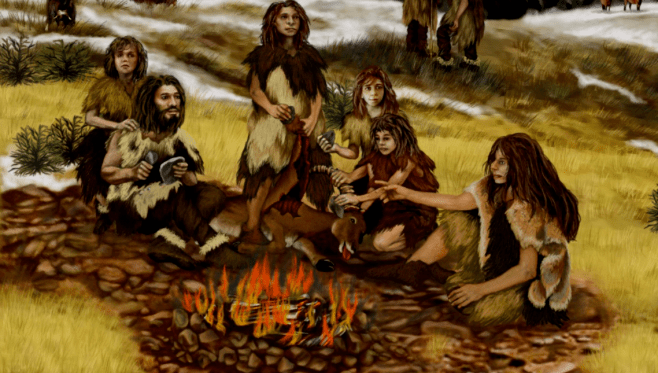
And fire is something like that. Fire is interesting. It catches our attention. There’s some curiosity about fire. We’ve had it since before prehistory, humanity, our early hominid ancestors, they interacted with fire before history even was recorded.
There are good things about fire. Fire creates light in the darkness. If the power goes out, we light candles. We have fire so that we can see. If it’s in the wintertime and the power goes out, those of us, those of you, I should say, that have functional fireplaces, you can light a fire in your fireplace. And all huddled around that, keep warm. Those of you that are brave enough to go camping—I prefer the great indoors—but those of you that like to go into the great outdoors and camp, you’ll set up a fire at night to keep warm. You can cook on the fire and that cooking on the fire, that was instrumental.
Evolutionary biologists and historians tell us that was instrumental in our development as a species to become where we we are today as people—because cooking on the fire changed the whole way that we eat and allowed our brains to grow, because we could extract more nutrients from our food. We can’t extract as many nutrients from meat unless it’s been chemically changed, and the proteins are broken down differently in fire. And by the way, meat tastes a lot better when it’s cooked. Right? No, honestly, it does. Our ancestors figured that out—“Oh! This tastes better.” So they ate even more of it. Carbohydrates in things like grains or fruits and so forth—if we would cook them, the fire unlocks the carbohydrates that are inside, giving us easier access to that so that we can digest it more easily. Just a couple of little pieces of extra energy that we don’t have to expend on digestion and on other things. Over thousands of years, our brains can use that energy to grow and we become who we are today
Fire.
Fire was at the heart of that when we learned to tame fire. We blossomed as a species.
But fire also has bad things. This is probably actually what we learned first as as early people. Other animals know it too. I was watching Naked and Afraid last yesterday. Yeah, okay, it’s a guilty pleasure. But the contestants light a fire at night. They light a fire at night at their camp to keep the animals away. Because the animals are afraid of the fire. The fire can burn them. The fire destroys things. Look at what’s going on in Canada, destroying the forest. Now of course we could talk about forest rebirth cycles and all that, but what’s going on in Canada right now is extraordinary. It’s destroying more than it should.
We know about what fire can do destroying things in this place. We had a fire destroy this very sanctuary, this holy sanctuary.
And yes, indeed, fire can kill things. Fire can kill things. In the state of Massachusetts, we know about that. With the witch trials, burning people at the stake, just as an example.
Fire.
Good and bad.
To be respected, to be cherished.
Holy, you are to be a holy nation, you are special.
That’s what holy means—set apart, sacred. You are holy. We talk about God being holy. Like fire as the source of humanity’s evolutionary ascent, God is the source of all goodness. And it’s holiness that’s behind that goodness, that being said apart, that being special. Behind holiness, behind the goodness is something bigger than just simply good.
It’s perfection.
And it’s a kind of perfection that’s impossible to approach on your own without cataclysmic consequences. We see that in the Old Testament. The notion here where Moses looks away at the fiery bush. He’s afraid to look at God. There’s a tradition in the Old Testament that if you look at God’s face, you will die. God is that perfect, God is that holy, looking at God’s face will bring about your death. Even saying God’s name is so holy that we’re not allowed to do it. “I am who I am,”God says. He doesn’t give a name. He says, “I am who I am.” And we have this from the story of Moses, just as one example. But there are others as well. There are very few in the Old Testament who have been blessed with being allowed to see God. And what’s interesting is in the Old Testament, God actually allows Moses to look at him. What it says is Moses sees him from behind, but if you translate directly, God allows Moses to see God butt. That’s what God allows Moses to see. He’s not allowed to look at the face of God. He can look at his butt…he’s holy butt…Get it? Okay, nevermind. I’ll stop.
Holiness is something so fantastic that when we encounter it, it is too much for us to bear on our own. Holiness is about completeness. It’s about cleanliness. It’s about purity. It’s about being acceptable.
The people of God knew that if they wanted to commune with God, if they wanted to be near God, if they wanted to have a relationship with God, God told them they were to be holy, like the Lord their God is holy. So in order to come nearer to God, we need to become holy, we need to become complete, or we need to become clean, we need to be come pure, in order to become acceptable. Because we are unlike God in our natural state. And so we are unable to approach God on our own.
But let’s go to what Jesus is doing in today’s Gospel and recall again, what I said at the beginning of the sermon. Jesus is the incarnation of God’s attributes. Jesus is the incarnation of God’s holiness. God’s holiness is right here before us in Jesus Christ.
So what’s Jesus doing?
He’s tooling about Judea. He’s going to church. Jesus goes to church. What would Jesus do? Jesus would go to church—like it says here, teaching in the synagogue, proclaiming the good news of the kingdom, curing every disease and every sickness. This is what Jesus is doing. Jesus is bringing the holiness of God to the people. He’s making them complete. He is cleaning them. He is purifying them.
Because, you see, these things, particularly the diseases and the sickness, were what precluded people from going into the synagogue, into the presence of God, into worship. They were also kicked out of their community. So if God cleaned them, if God purified them, they were able to participate fully. They were made complete. So Jesus was doing God’s work. Jesus, the incarnation of God’s holiness, is bringing holiness to the people instead of the people having to do it themselves. God is coming to them. For us and for our salvation, for us and for our healing, for us and for our perfection—God has come down to heaven and meets us. That’s what Jesus is doing.
We are made holy, we are made complete, we are made clean, pure and acceptable. But that’s not where Jesus stops. It goes on. It’s great that we’re clean, perfect, holy, and all those wonderful things. But to what end? To what end? That’s not where Jesus stops, he summons his twelve disciples, and when we hear that, we always have to think of ourselves as well. Today, we’re disciples of Jesus as well. So he summons us and he gave us authority over unclean spirits to cast them out, and to cure every disease and every sickness.
Well, isn’t that what Jesus was doing?
Jesus was doing that. Now he’s saying to us, the disciples, your job. Tag! You’re it. Tag…you’re it.
Jesus gives us his authority, making us holy and giving us his holiness. Jesus tasks us with God’s task, with bringing about completion, cleanliness, purity, and acceptability, reconciliation, salvation. We possess the same power as Jesus because he has given us his authority, has given us his holiness.
That holiness is none other than the gift of God’s own self, the gift of the Holy Spirit, as Saint Paul tells us today in the second lesson. The gift of the Holy Spirit, sometimes called a dove, sometimes called a wind, and sometimes called a fire. Jesus gives us his power, his authority, his holiness, and the Holy Spirit completes us. The Holy Spirit cleans us. The Holy Spirit purifies us. She makes us acceptable to God. That gift, the gift of the Holy Spirit, burns within us, kindles within us, the justice of God. And when we hear the word justice of God, we have to think about God’s dogged desire. That’s what it means. That God is just. God has a dogged desire to make things right. The gift of the Holy Spirit kindles within us the justice of God, a justice that looks at this world, not as we would look at the world, but as God does, as Jesus does. He has compassion…has compassion. As the gospel says today—he had compassion on them because they were harassed, like sheep without a shepherd. Not as we would, but as Jesus does.
And so Jesus in giving us his power and giving us his authority doesn’t just do it for our benefit. It’s for the benefit of the whole of humanity. Jesus gives us authority to make holy, to cast out demons, to cast out the demons of loneliness, of isolation, of alienation. Jesus gives us the authority to make holy to heal the sickness of backbiting, of suspicion, of showboating, of selfishness. He gives us authority not for our own benefit, but for the benefit of all people.
Does that scare anybody? All people, that’s a daunting task, folks, all people. But that authority comes to us in our own situation. In our own time, in our own place, in our own relationships. Jesus gives us the authority, the power to change the world and as he did we begin in our own lives, one relationship at a time. You have to start somewhere.
The fire of God’s justice, the fire of God’s righteousness, the fire of God’s dogged desire to make all things right, to reconcile all things to his vision of peace, to his design for Shalom, burns within us, so that our day-to-day lives might be holy unto God, just as the Lord our God is holy. For the sake of the world, the sake of all people who desperately long for something different, something special, something holy. You are a priestly people, a holy nation. You are special—because that’s the way God made you.
In the name of the Father, and of the Son, and of the Holy Spirit. Amen.
 The Rev'd Daniel W. Spigelmyer, Jr.